


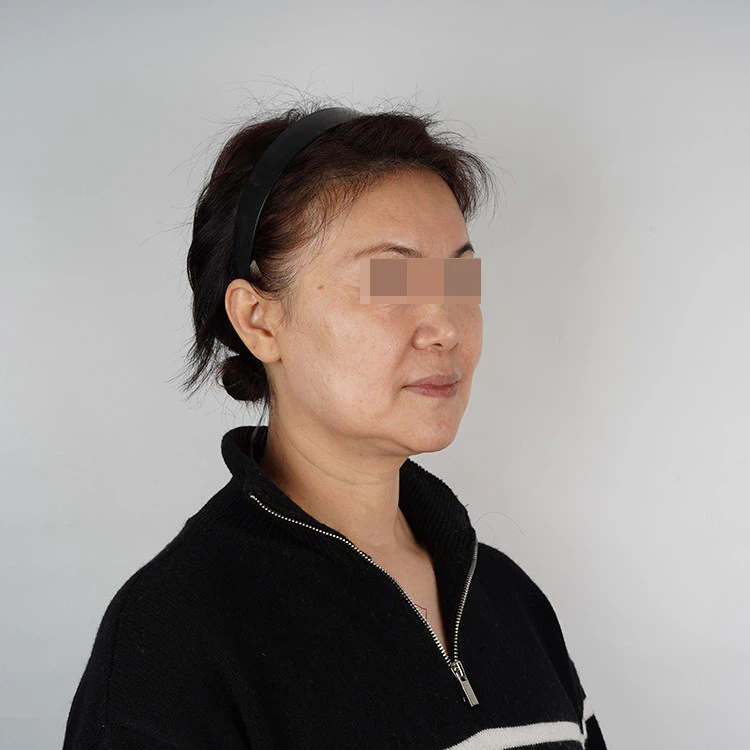


Product introduction:
Nasolabial folds improvement surgery can fill in the "aging grooves" on both sides of the nose and reshape the smooth lines of the face by replenishing the lost support in the deeper layers and simultaneously lifting the loose tissues, so that the sagging "eight lines" can be reversed to a natural, soft and youthful state.

(Preoperative: nine days postoperative)
What is nasolabial fold filler surgery?
Nasolabial fold filler surgery focuses on injecting fillers to improve the signs of aging in the nasolabial fold area, common signs of aging include:
Deepening of the lines: due to sagging facial skin, the wrinkles on either side of the nasolabial folds gradually deepen, affecting the facial contours.
Facial Depression: As the face loses soft tissue with age, the depression in the nasolabial folds becomes more pronounced.
Skin laxity: Loss of facial collagen leads to skin laxity, making the contours of the nasolabial folds more prominent.
The goal of nasolabial fold filler surgery is to restore firmness and smoothness to the face through filler injections, resulting in a more natural contour of the nasolabial fold area. Commonly used fillers include hyaluronic acid, autologous fat, or collagen. The choice of filler will be based on the patient's needs, skin condition, and the doctor's recommendation.
Preparation for nasolabial fold filler surgery
After consulting with your doctor and agreeing to proceed with the procedure, the following are preparations for the nasolabial fold filler procedure:
Avoid smoking: Smoking affects blood circulation to the skin and may affect the filler results and recovery progress.
Avoid blood-thinning medications: Discontinue the use of medications such as aspirin and non-steroidal anti-inflammatory drugs, which may increase the risk of bleeding.
Facial Examination and Evaluation: The doctor will conduct a thorough examination of the patient's face to evaluate the depth of the nasolabial folds and the appropriate filler.
Confirmation of expectations: The patient should communicate with the doctor to confirm the expectations of the filler results and to understand the real results of the procedure and possible post-operative changes.

(Preoperative)
Procedure of nasolabial fold filling surgery
Nasolabial fold filler surgery usually includes the following steps:
Local anesthesia: Before the procedure, the doctor will administer local anesthesia to the nasolabial fold area to ensure that the patient feels no pain during the injection process.
Filler injection: The doctor will use a syringe to inject filler evenly into the nasolabial folds area to restore smoothness and firmness to the face, depending on the patient's facial condition.
Shaping and Adjustment: After injection, the doctor will massage and shape the filler area appropriately to ensure even distribution of the filler and natural-looking results.
Completion of the procedure: The entire procedure usually takes only 20-30 minutes, does not require hospitalization, and patients can resume normal activities immediately after the procedure.
Suitable Crowd
Nasolabial fold filler surgery is suitable for the following people
Adults whose nasolabial folds have deepened significantly or become more depressed.
Facial skin that is sagging and showing signs of aging.
Skin condition is good enough to support the injection of fillers.
Have no history of severe allergies or skin disorders and are able to undergo filler surgery without difficulty.
Have a reasonable expectation of the results of the procedure and understand that the procedure can improve the appearance of the face, but cannot completely stop the aging process.
Recovery and Care
Recovery time for nasolabial fold filler surgery is short and usually goes through the following stages:
Day 1: Minor swelling or bruising may occur after the procedure, but it usually subsides quickly and patients can go about their daily activities as normal.
Within a week: The swelling and bruising gradually subside and the results begin to show. The patient can resume normal life, but avoid touching or massaging the padded area vigorously.
After one month: the postoperative effect is stable, the filling effect of nasolabial folds is more natural, and the facial line is smooth.
Following the doctor's postoperative care recommendations, including avoiding sun exposure and avoiding the use of harsh cosmetics, will help speed up recovery and ensure that the filler effect lasts.
Potential Risks and Precautions
Although nasolabial fold filler surgery is a relatively safe non-surgical treatment, there are still certain risks and precautions:
Allergic reactions: Some fillers may cause allergic reactions, so you need to choose the right material under your doctor's guidance.
Swelling or bruising: slight swelling or bruising may occur after the procedure, which usually subsides on its own within a few days.
Uneven results: If the filler is uneven, localized unevenness may occur and usually needs to be adjusted.
Filler Absorption: Different fillers have different rates of absorption and the duration of the effect varies depending on the type of filler.
Choosing an experienced surgeon and having adequate pre-operative communication are key to minimizing risks and ensuring the results of your procedure.
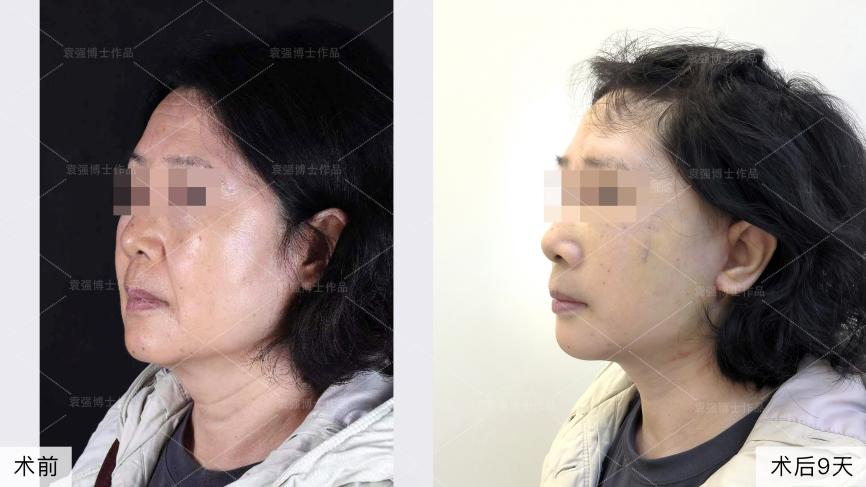
(Preoperative: nine days postoperative - side)
Hot Tags: nasolabial fold filler, China nasolabial fold filler, downturned mouth surgery, blepharoplasty surgery, nasolabial enhancement surgery, wrinkle reduction surgery, midface facial line surgery, eye opening surgery